
Regulated Markets Formalise Entry Pathways and Oversight Standards
 Chloe O'Sullivan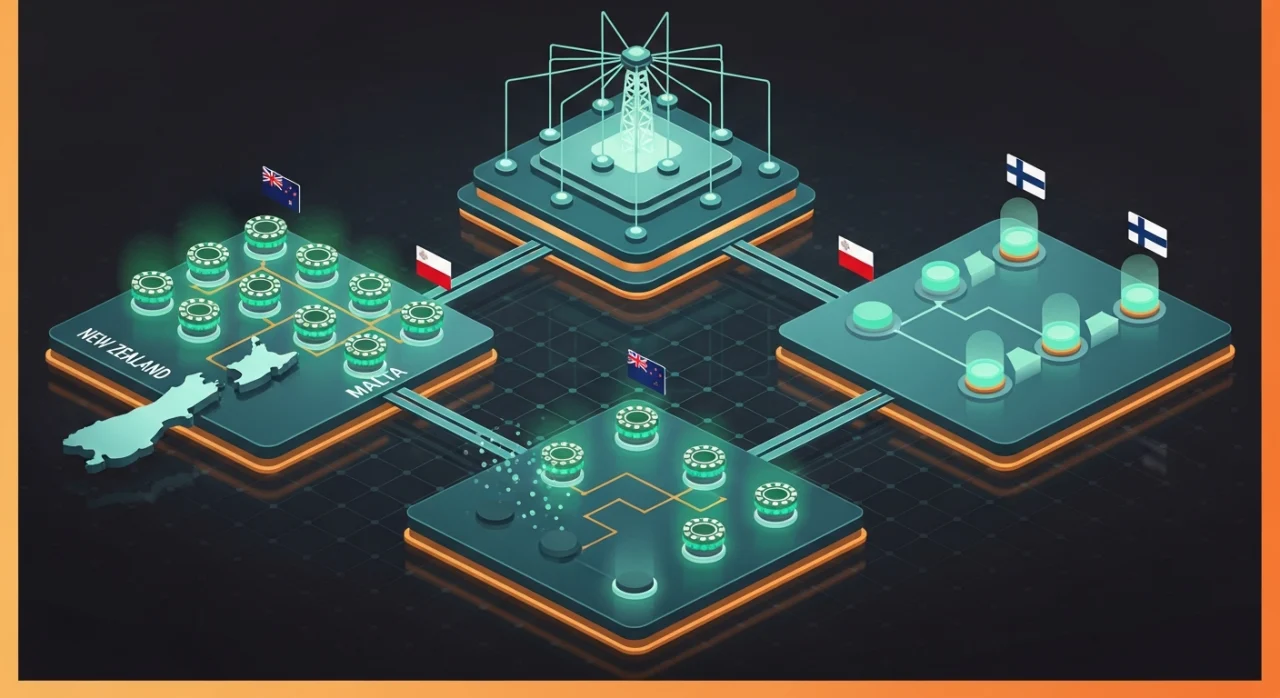
Key Takeaways
- New Zealand establishes capped licensing regime for online casino operators, shifting unregulated activity into supervised framework with strict consumer protections.
- Malta Gaming Authority enforces compliance through cancellation of B2C authorisation, emphasising ongoing obligations for market participants.
- Finland progresses toward 2027 liberalisation, setting license application timelines and fees to support orderly transition from monopoly model.
New Zealand iGaming Licensing Process to Commence in July 2026
New Zealand’s Department of Internal Affairs outlined the timeline for implementing the Online Casino Gambling Bill, with licensing applications scheduled to open in July 2026 following expected Royal Assent in May. The regime caps approvals at up to 15 operators through a competitive, multi-stage process incorporating detailed regulatory assessments and auctions.
Offshore providers currently serving New Zealand players must apply by 1 December 2026 or face significant penalties and market exclusion. The framework includes initial 12% offshore gambling duty, rising to 16%, with a portion allocated to community funding. This development creates a structured entry point for new casino operators into a previously unregulated market. It prioritises player safeguards, fairness, and economic contributions while aiming to redirect activity from offshore sites into a licensed environment. For industry stakeholders, the capped model balances controlled competition with robust oversight, offering predictable pathways for compliant ventures focused on long-term sustainability.
MGA Cancels Winzon Group Limited B2C Authorisation
The Malta Gaming Authority cancelled the B2C gaming service authorisation (reference MGA/B2C/717/2019) held by Winzon Group Limited, effective retroactively from 11 March 2026. Announced on 7 April 2026, the decision invoked provisions of the Gaming Compliance and Enforcement Regulations due to multiple regulatory shortcomings. The authority directed immediate cessation of operations, player notifications, refunds of legitimate balances, and settlement of outstanding fees exceeding €46,000 plus associated penalties.
Winzon Group had maintained the license since 2019 and operated various iGaming sites. This enforcement action reinforces the MGA’s focus on sustained compliance in Europe’s prominent licensing jurisdiction. New casino operators seeking MGA approval gain clear insight that authorisation requires continuous adherence to financial, technical, and player protection standards. The measure strengthens market integrity, enhances player confidence, and levels the competitive field for entities committed to rigorous ongoing obligations.
Source: Malta Gaming Authority official announcements
Finland Advances Preparations for 2027 iGaming Liberalisation
Finland continues implementation of its new Gambling Act, signed earlier in 2026, which ends Veikkaus’ monopoly on online betting, casino games, slots, and money bingo. License applications for private operators are set to open in March 2026, enabling launches from July 2027 under a multi-license system with defined fees and supervision requirements.
The reform introduces competitive licensing while maintaining state control over lotteries and land-based slots. Technology providers and prospective entrants are aligning platforms with expected technical standards, responsible gambling tools, and data protection rules. In a high-engagement Nordic market, this transition offers structured opportunities for new casino operators equipped with compliant solutions. The phased approach demonstrates a measured shift toward regulated competition, providing regulatory certainty and emphasising player protection from the outset of market entry.
Source: iGaming Business / Finnish government updates
MGA Publishes 2026 Supervisory Engagement Priorities
The Malta Gaming Authority released its Supervisory Engagement Efforts for 2026, detailing thematic reviews on internal controls for cash and cash equivalents, crypto asset frameworks, integrity in athlete and esports betting, and enhanced Alternative Dispute Resolution reporting. These priorities build on prior findings, such as self-exclusion practices, and guide risk-based oversight throughout the year.
For operators planning or holding MGA licenses, early alignment with these focus areas supports smoother compliance and authorisation processes. The initiative underscores Malta’s evolution toward proactive supervision, fostering a stable environment where new casino ventures can operate with confidence in consistent standards and robust player safeguards.
Source: Malta Gaming Authority publications