


Global iGaming Licensing Frameworks Advance in Key Jurisdictions

Recommended casinos
Key Takeaways
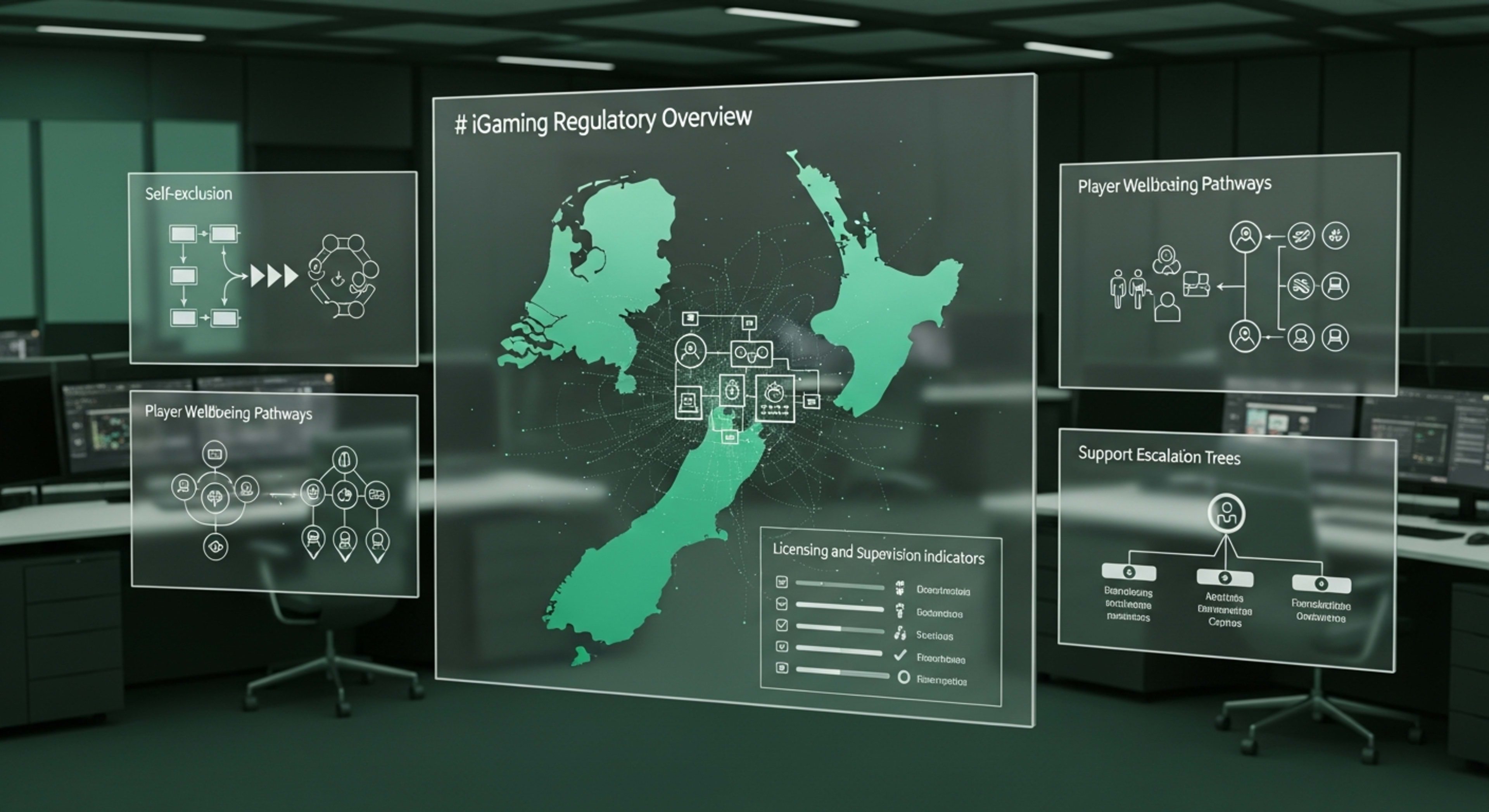
- New Zealand finalises timeline for regulated online casino market with first licenses issued in December 2026 and up to 15 available via auction.
- The Netherlands increases remote gambling license application fees by 28% from April 2026 and prepares for the first major license renewals in October 2026.
- KSA strengthens its focus on player protection, enforcement against illegal operators, and structured supervision ahead of the 2026 renewal cycle.
New Zealand Confirms December 2026 Launch for Regulated Online Casino Licenses
The New Zealand government has set the start date for its regulated online casino sector. Licenses will first be issued on 1 December 2026 under the Online Casino Gambling Bill. The process begins with expressions of interest in July 2026, followed by full applications from October 2026, and concludes with an auction round in September 2026 for up to 15 licenses. Each license will run for three years initially (renewable to five years) and will cover casino-style games only. Operators are limited to three licenses to encourage competition.
The framework moves the country away from an unregulated, offshore-dominated environment toward a supervised domestic supply. Key player-protection elements include strict advertising curbs starting May 2026, mandatory harm-minimization tools, and compliance requirements designed to channel existing demand into safer, taxed channels while limiting overall market expansion.
Source: SiGMA World, GamblingLaw.co.nz
Netherlands Increases Remote Gambling License Fees Effective April 2026
From 1 April 2026, the Kansspelautoriteit (KSA) will raise fees for remote gambling license applications. The cost of a new license increases by 28%, from €48,000 to €61,300, while fees for changes to existing licenses rise from €8,000 to €10,200. The increases, tied to inflation and higher personnel costs, come as the authority gears up for the first five-year license renewals, which begin expiring in October 2026.
Combined with stricter requirements introduced in January 2026 (including mandatory exit plans and WWFT risk analyses), the fee adjustment raises the financial and administrative bar for new entrants and renewing operators. It supports the KSA’s goal of maintaining a stable, well-supervised market with strong emphasis on player safeguards and regulatory sustainability.
Source: iGamingToday.com, iGaming Expert
Dutch Regulator Prioritises Player Protection and Illegal Gambling Crackdown in 2026 Agenda
The KSA has published its 2026 Supervisory Agenda, placing heavy emphasis on blocking illegal gambling operators and reinforcing player-protection measures. The authority is reorganizing into dedicated directorates for player protection, permits & supervision, and digital monitoring & analysis. Priorities include intensified enforcement against unlicensed sites targeting Dutch players, higher compliance standards during the upcoming renewal wave, and proactive monitoring of advertising and product risks.
These initiatives build on recent licensing tightening measures and signal continued regulatory determination to keep the Dutch market among the most tightly regulated in Europe. Players benefit from reduced exposure to unregulated risks, while compliant operators gain clearer enforcement boundaries during a pivotal renewal period.
Source: Player Protection Hub, CDC Gaming Reports